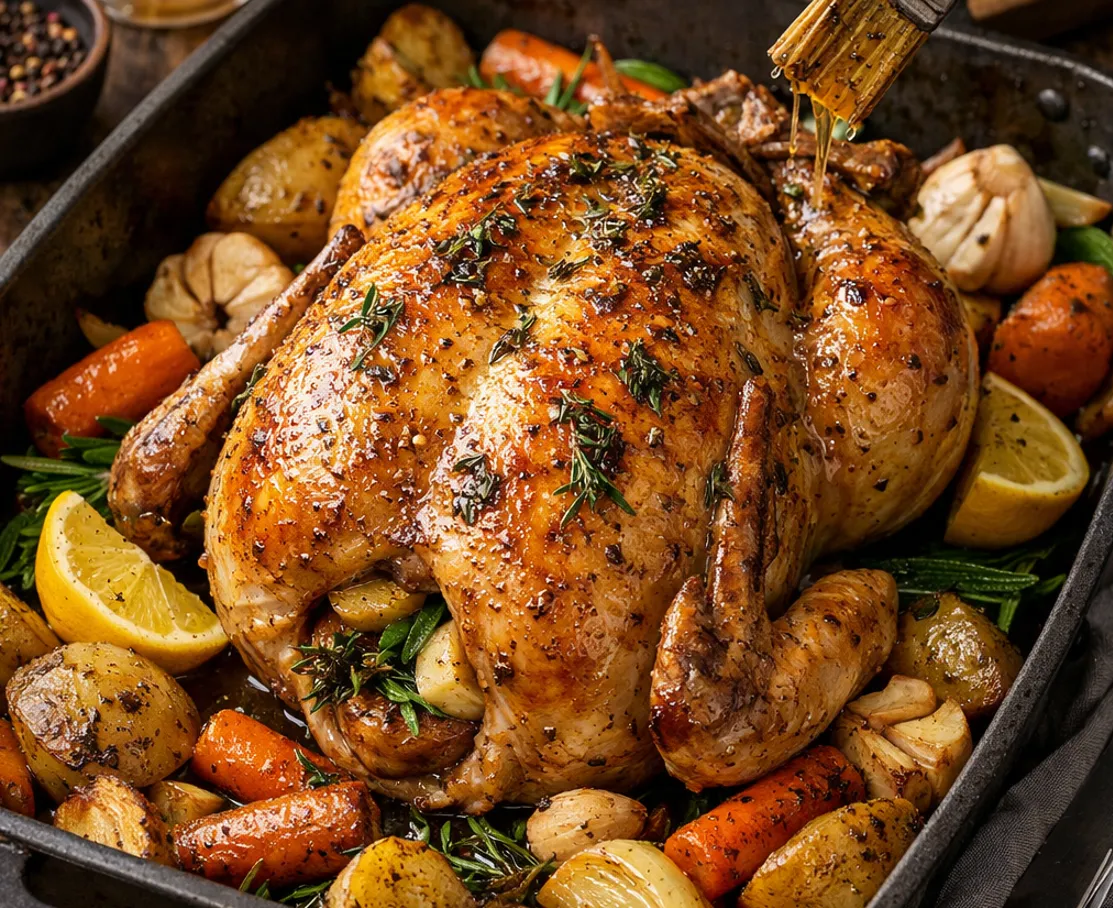
Roasting a whole chicken is one of those classic dishes that brings both comfort and satisfaction to the kitchen. Over the past year, I’ve tested this roast chicken recipe more than five times, adjusting temperatures, herbs, and cooking methods until I found the perfect balance of crispy skin and juicy, tender meat. This guide combines my personal experience with expert tips from celebrity chefs like Gordon Ramsay, Ina Garten, and Jamie Oliver. By the end, you’ll have a reliable, foolproof method to impress your family and guests.
Table of Contents
- Why Roast a Whole Chicken? The Benefits
- Ingredients: What You’ll Need For Roast Chicken Recipe
- Step-by-Step Guide to Roasting a Whole Chicken
- My Personal Testing Notes and Lessons Learned
- Celebrity Chef Tips (As a Bonus)
- Variations: Make It Your Own
- FAQs About Roasting Chicken
- Conclusion: Secrets to a Perfect Roast
1. Why Roast a Whole Chicken?
Roasting a whole chicken is affordable, versatile, and satisfying. Here’s why I always recommend it:
Cost-Effective and Practical
A whole chicken is often cheaper than individual cuts. During my testing, I found that leftovers were perfect for sandwiches, soups, and salads, which helped me stretch meals across several days.
Flavor and Versatility
By experimenting with different herbs and seasonings, I discovered that roasting allows the flavors to develop fully. The skin crisps up while the meat remains juicy, a combination that is always a hit with family and friends.
Health Benefits
Chicken is a lean protein, and roasting preserves nutrients while minimizing added fats. Pair it with roasted vegetables, and you’ve got a balanced, wholesome meal.
Skill-Building for Home Cooks
Roasting teaches essential skills: seasoning, timing, and oven management. With my personal adjustments, I’ve developed a method that is beginner-friendly yet professional enough to impress guests.
2. Ingredients: What You’ll Need For Roast Chicken Recipe
The secret to a perfect roast chicken lies in quality ingredients. During my testing, I experimented with various combinations to identify what consistently produced the best flavor:
Essential Ingredients: Roast Chicken Recipe
- 1 Whole Chicken (4–5 lbs, preferably organic or free-range)
- 2 Tablespoons Olive Oil or Butter (I personally prefer butter under the skin for crispier results)
- 1 Lemon, halved
- 4 Garlic Cloves, crushed
- Fresh Herbs: rosemary, thyme, sage (I tested each individually and in combination)
- 1 Onion, quartered
- Salt and Pepper, to taste
- 1 Cup Chicken Broth (optional, to keep the chicken moist)
Optional Flavor Boosters:
- Paprika for smoky undertones
- Dijon mustard for a tangy kick
- Honey or maple syrup for subtle sweetness
Tips from Testing:
- Butter under the skin results in more evenly browned skin.
- Fresh herbs outperformed dried in flavor intensity.
- Lemon and garlic inside the cavity consistently gave the chicken an aromatic lift.
3. Step-by-Step Guide to Roasting a Whole Chicken Or Roast Chicken Recipe
After testing this recipe multiple times, I’ve perfected a method that ensures crispy skin and juicy meat every time.
3.1 Preheat the Oven
Set the oven to 425°F (220°C). During testing, I noticed that lower temperatures produced uneven browning, while higher temperatures dried out the breast.
3.2 Prepare the Chicken
Pat the chicken dry with paper towels. Removing moisture is key for crispy skin. Optional: tie the legs together with kitchen twine for even cooking.
3.3 Season and Stuff
- Rub olive oil or butter over the skin and under it.
- Season generously with salt and pepper, including the cavity.
- Stuff the cavity with lemon, garlic, and fresh herbs.
Personal Testing Note:
I tested stuffing with and without herbs. Adding rosemary and thyme consistently improved the aroma and flavor of the meat.
3.4 Roast the Chicken
Place breast-side up in a roasting pan. Surround with onions and pour chicken broth into the pan if desired. Roast for 1 hour 15 minutes, or until the internal temperature reaches 165°F (75°C).
Basting Tip:
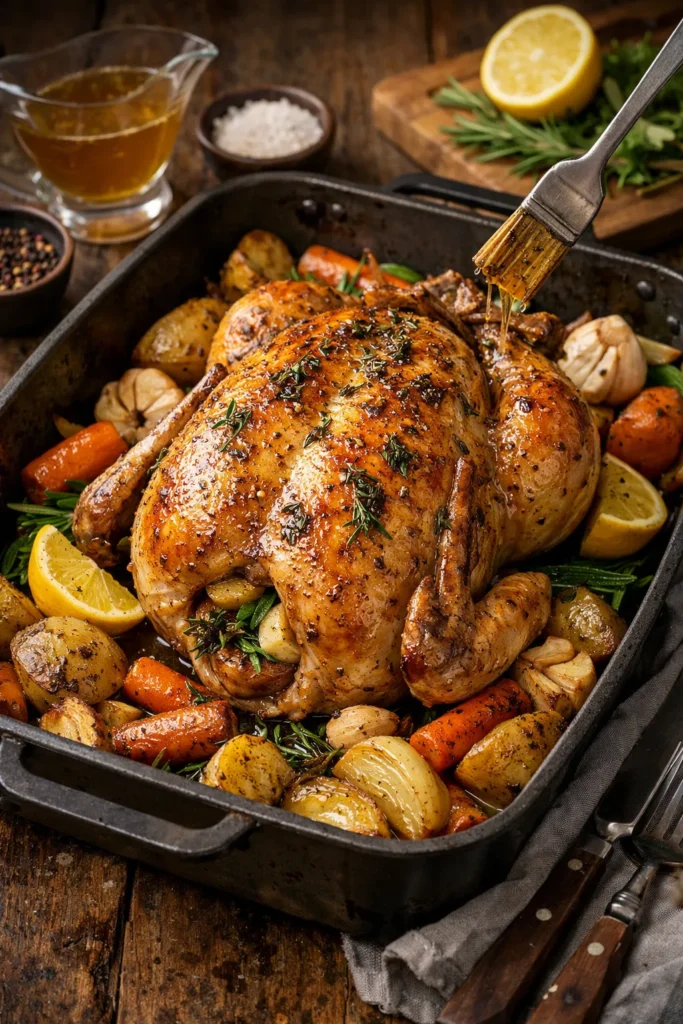
I experimented with basting every 15, 30, and 45 minutes. Basting every 30 minutes worked best—it keeps the meat juicy without lowering oven temperature too much.
3.5 Rest Before Carving
Let the chicken rest 10–15 minutes. This ensures juices redistribute throughout the meat.
3.6 Carving
- Remove legs first, then wings, then breast.
- Slice against the grain for tender pieces.
Testing Insight:
I tried carving immediately after roasting; the meat lost more juice. Resting is essential.
4. My Personal Testing Notes and Lessons Learned From Roast Chicken Recipe
Through testing this roast chicken recipe multiple times, I discovered several key insights:
- Optimal Oven Temperature: 425°F provides the perfect balance of crispy skin and juicy meat.
- Butter vs Olive Oil: Butter under the skin yields a richer flavor; olive oil is lighter but less flavorful.
- Stuffing Aromatics: Lemon, garlic, and herbs inside the cavity create the best aroma.
- Resting is Non-Negotiable: Resting at least 10 minutes keeps meat juicy.
- Vegetable Placement: Placing vegetables under the chicken absorbs drippings for flavor.
5. Celebrity Chef Tips (As a Bonus)
While my recipe is based on my own testing, these chef tips add extra expertise:
- Gordon Ramsay: Basting every 30 minutes and rubbing butter under the skin.
- Ina Garten: Herb-infused cavity with lemon and garlic for aroma.
- Jamie Oliver: Roasting with root vegetables for a rustic, one-pan meal.
Note: These tips complement my tested method and are optional enhancements.
6. Variations: Make It Your Own Roast Chicken Recipe
6.1 One-Pan Meal with Vegetables
Add root vegetables or seasonal vegetables around the chicken. My tests showed carrots and potatoes absorb drippings perfectly.
6.2 Herb and Spice Variations
- Mediterranean: oregano, basil, garlic, lemon
- Indian-inspired: turmeric, cumin, coriander
- Sweet & Savory: honey, paprika, thyme
6.3 Marinades and Brining
- Brine with salt, sugar, and aromatics for 4–6 hours for extra juiciness.
- Buttermilk marinades tenderize and add subtle flavor.
6.4 Making Gravy
Use the pan drippings; my tests confirmed adding a little flour thickens the gravy without losing flavor.
6.5 Global Flavor Twists
- Asian: soy sauce, ginger, sesame oil
- Mexican: chili powder, lime, cumin
- French: herbes de Provence, garlic, butter
7. FAQs About Roast Chicken Recipe
Q1: How do I know when the chicken is done?
A: Use a meat thermometer—165°F in the thickest part. Juices should run clear.
Q2: Can I roast a frozen chicken?
A: Fully thaw before roasting for even cooking.
Q3: How long does a roast chicken last?
A: 3–4 days in the fridge, up to 3 months frozen.
Q4: How to keep skin crispy?
A: Pat dry, roast at high heat, avoid covering until resting.
Q5: Can I add vegetables?
A: Yes, any that roast well at 400–425°F.
8. Conclusion: Secrets to a Perfect Roast Chicken Recipe
Roasting a whole chicken is a skill any home cook can master. Key takeaways from my testing:
- Use quality ingredients.
- Season generously and stuff with aromatics.
- Roast at 425°F for 1 hour 15 minutes for a 4–5 lb chicken.
- Rest before carving to retain juices.
- Optional: use chef tips for extra flavor.
With this tested roast chicken recipe, you’ll consistently get juicy meat, crispy skin, and a meal that impresses. Don’t be afraid to experiment with herbs, spices, and vegetables to make it your own!
2 thoughts on “Guide to Roasting a Whole Chicken Inspired by Celebrity Chefs”