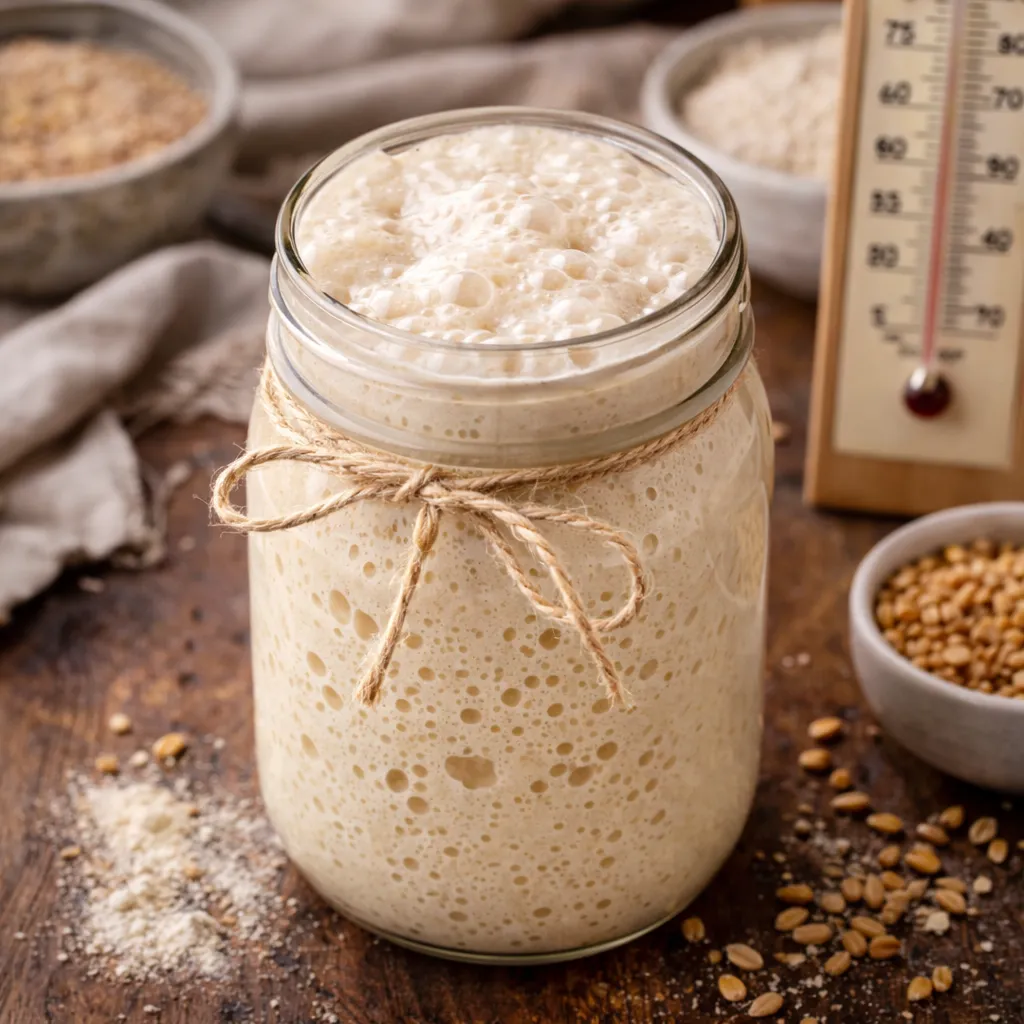
Sourdough thrives on tradition and wild fermentation, but a sluggish starter is a common hurdle. This guide provides effective, natural techniques to troubleshoot and make your sourdough starter rise faster. Key strategies include maintaining the ideal temperature of 24–27°C (75–80°F), adjusting the feeding ratio (e.g., 1:2:2), and utilizing whole grain flour (rye or whole wheat) for stronger yeast activity. Learn how to ensure optimal conditions, from using warm, non-chlorinated water to consistent twice-daily feedings, to achieve a starter that doubles in size within 4–8 hours, ready for baking.
Table of Contents
- Introduction
- The Timeless Appeal of Sourdough
- What Exactly Is Sourdough Starter?
- The Science Behind Sourdough Fermentation
- Why Your Sourdough Starter May Be Slow
- How to Make Sourdough Starter Rise Faster (In-Depth Guide)
- Choosing the Best Flour for a Faster Rise
- Water Quality and Its Impact on Sourdough
- Temperature: The Hidden Key to Active Sourdough
- Feeding Schedules That Boost Activity
- Starter Consistency and Hydration Explained
- Step-by-Step: Strengthening a Weak Sourdough Starter
- How to Tell When Your Starter Is at Peak Strength
- Troubleshooting Common Sourdough Problems
- Printable Recipe Card: Sourdough Starter
- Frequently Asked Questions
- Conclusion
erfect Your Culinary Art! Oliver Agour’s Innovative E-Books Are HERE!
Are you ready to take your modern cooking to the next level? Whether you’re following viral culinary trends or focusing on healthy cooking and quick recipes, Oliver Agour’s ebook collection is your essential guide to cooking smarter and more efficiently.
1. 20 TikTok-Style Recipes: Cook What’s Viral!
Unlock the secrets behind trending recipes and create eye-catching dishes that look spectacular and are ready in just minutes. This digital cooking guide is perfect for:
- Content creators (Food Bloggers)
- Food enthusiasts
- Busy cooks looking for quick meal ideas
Keywords: TikTok recipes, viral food, quick cooking, easy recipes, culinary inspiration, food trends.
➤ Download now: https://oliveragour.gumroad.com/l/20-TikTok-Style-Recipes
2. From To Yogurt: Your Homemade Yogurt Masterclass
Transform a simple ingredient into a culinary masterpiece! This complete course gives you the exact steps for making homemade yogurt (from scratch) and reveals a wide range of creative yogurt-based recipes you won’t find anywhere else.
Keywords: homemade yogurt, yogurt recipes, healthy dishes, fermentation, yogurt desserts, yogurt cooking guide.
➤ Get it here: https://oliveragour.gumroad.com/l/FromToYogurt
1. Introduction To sourdough starter
Sourdough is more than just bread — it is one of humanity’s oldest culinary traditions, rooted in time, patience, and natural fermentation. From ancient civilizations to modern artisan bakeries, sourdough continues to captivate bakers with its depth of flavor, crisp crust, and airy crumb. At the heart of every successful loaf lies a healthy, active starter.
One of the most searched questions in sourdough baking is how to make sourdough starter rise faster. A slow starter can be frustrating, especially when you’re eager to bake. The truth is that sourdough is alive. When treated properly, it responds quickly, becoming vigorous, bubbly, and reliable.
This expanded guide explores sourdough deeply while clearly answering how to make your starter rise faster using proven, natural methods that respect traditional fermentation.
2. The Timeless Appeal of sourdough starter
Sourdough has endured for thousands of years because it offers qualities modern bread often lacks:
- Complex, slightly tangy flavor
- Natural leavening without commercial yeast
- Improved digestibility through fermentation
- Better mineral absorption
- Longer shelf life
Unlike instant yeast breads, sourdough develops character over time. This slow fermentation is what gives sourdough its soul — and why caring for your starter is essential.
3. What Exactly Is Sourdough Starter?
A sourdough starter is a fermented mixture of flour and water inhabited by wild yeast and lactic acid bacteria. These microorganisms occur naturally in flour and the environment. When fed regularly, they multiply, producing carbon dioxide (for rise) and organic acids (for flavor).
A healthy sourdough starter should:
- Double in size after feeding
- Show bubbles throughout
- Smell fresh, tangy, and slightly sweet
If this doesn’t happen, the starter simply needs better conditions — not replacement.
4. The Science Behind Sourdough Fermentation
Understanding fermentation helps you improve your sourdough faster.
Wild Yeast
Wild yeast produces gas that makes the starter and dough rise.
Lactic Acid Bacteria
These bacteria produce lactic and acetic acids, contributing flavor, strength, and preservation.
For sourdough to thrive, yeast and bacteria must stay in balance. Too much acidity slows yeast. Too little feeding starves bacteria. Speed comes from harmony.
5. Why Your Sourdough Starter May Be Slow
A sluggish sourdough starter is usually caused by one or more of the following:
- Cold environment
- Weak or refined flour
- Infrequent feedings
- Chlorinated water
- Incorrect ratios
- Starter still too young
Identifying the issue allows you to correct it quickly.
6. How to Make Sourdough Starter Rise Faster (In-Depth Guide)
Here are the most effective ways to speed up sourdough activity — naturally and safely.
Increase the Temperature
Temperature is the biggest factor in sourdough activity.
Ideal range:
24–27°C (75–80°F)
How to achieve this:
- Place the starter in the oven with the light on
- Keep it near (not on) a warm appliance
- Wrap the jar with a towel
Cold slows fermentation dramatically.
Feed More Often
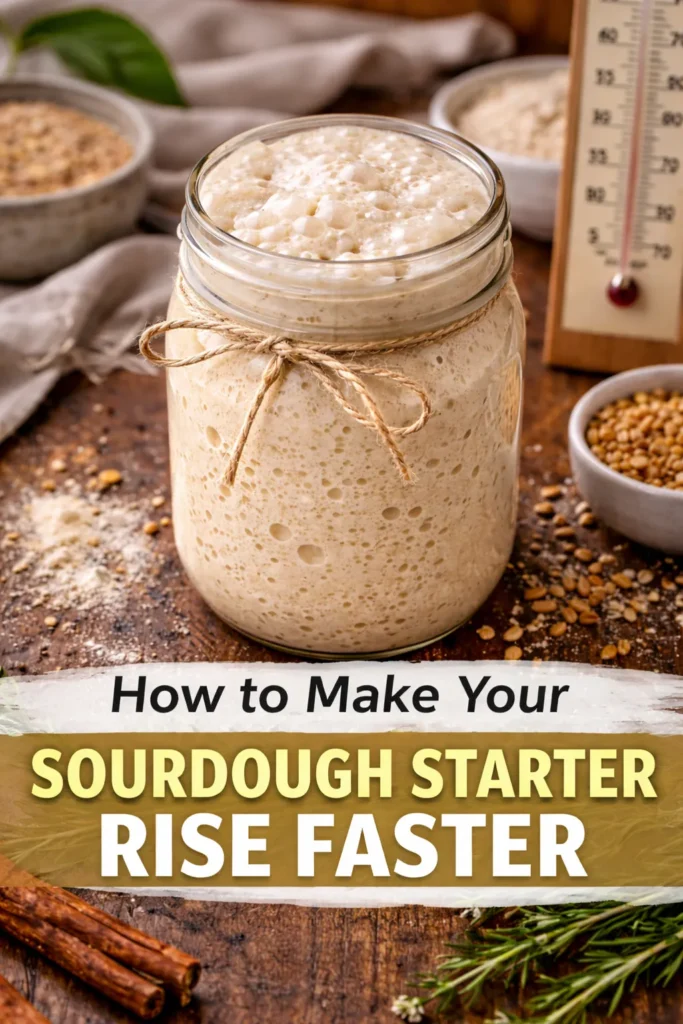
To make sourdough starter rise faster, feed it every 12 hours instead of once daily. Frequent feeding refreshes nutrients and strengthens yeast populations.
Use Nutrient-Rich Flour
Whole grain flours accelerate fermentation.
Best choices:
- Whole wheat flour
- Rye flour
- 50/50 whole grain and bread flour
Rye flour, in particular, is famous for waking up weak starters.
Use Warm Water
Water temperature should be around 26°C (78°F).
Too cold slows yeast.
Too hot kills it.
Adjust Feeding Ratios
A slow starter benefits from extra food.
Recommended ratio for speed:
1:2:2 (starter : flour : water)
This provides fuel without overwhelming the culture.
Avoid Chlorine
Chlorine inhibits fermentation.
Use:
- Filtered water
- Bottled water
- Tap water rested 12–24 hours
Maintain Proper Texture
Your starter should resemble thick pancake batter.
- Too thick = slow fermentation
- Too thin = weak structure
7. Choosing the Best Flour for a Faster Rise
Flour quality matters more than many bakers realize.
Best Flours for Sourdough Starter
- Rye flour (fastest activity)
- Whole wheat flour
- Unbleached bread flour
Avoid bleached or highly refined flours, especially during early development.
8. Water Quality and Its Impact on Sourdough
Water is often overlooked but crucial.
Good water:
- Clean
- Non-chlorinated
- Neutral in smell
Poor water can stall fermentation completely.
9. Temperature: The Hidden Key to Active Sourdough
Even a perfect feeding routine won’t work in a cold kitchen.
If your room is below 20°C (68°F), your starter will slow down. Warmth alone often solves the problem of slow rise.
10. Feeding Schedules That Boost Activity
For a Weak Starter
- Feed every 12 hours
- Use whole grain flour
- Keep warm
For Maintenance
- Feed once daily (room temperature)
- Or weekly (refrigerated)
Consistency is more important than frequency.
11. Starter Consistency and Hydration Explained
Most starters are kept at 100% hydration (equal flour and water by weight). This balance supports fast fermentation and flexibility.
Thicker starters ferment slower but develop more acidity. Wetter starters ferment faster but can weaken structure if too thin.
12. Step-by-Step: Strengthening a Weak Sourdough Starter
- Discard all but 20 g starter
- Add 40 g whole wheat or rye flour
- Add 40 g warm filtered water
- Mix thoroughly
- Cover loosely
- Keep at 24–27°C
Repeat every 12 hours for 2–3 days.
13. How to Tell When Your Starter Is at Peak Strength
Your sourdough starter is ready when:
- It doubles or triples in 4–6 hours
- The surface domes slightly
- Bubbles are visible throughout
- The aroma is fresh and tangy
This is peak activity — ideal for baking.
14. Troubleshooting Common Sourdough Problems
Starter smells like alcohol:
→ Feed more frequently.
Starter won’t rise:
→ Increase temperature and switch flour.
Starter too sour:
→ Feed with a higher ratio and reduce time between feedings.
Starter moldy:
→ Discard and start over (rare but possible).
15. Printable Recipe Card
Basic Sourdough Starter
Prep Time: 5 minutes
Fermentation: 5–7 days
Yield: 1 active starter
Ingredients
- 20 g active starter or discard
- 40 g whole wheat or rye flour
- 40 g warm filtered water
Instructions
- Discard excess starter, leaving 20 g.
- Add flour and water.
- Mix until smooth.
- Cover loosely.
- Keep warm and feed every 12 hours for fastest results.
16. Frequently Asked Questions
How long does sourdough starter take to rise?
Usually 4–8 hours after feeding when healthy.
Can sugar help sourdough starter rise faster?
No — flour naturally provides sugars.
Is rye flour better than wheat?
Yes, especially for weak starters.
Can I bake with a young starter?
Yes, but flavor and rise improve with age.
17. Conclusion
Sourdough teaches patience, but it also rewards understanding. If your starter feels slow, it isn’t broken — it’s simply responding to its environment. By controlling temperature, flour choice, feeding frequency, and hydration, you fully unlock the answer to how to make sourdough starter rise faster.
Once strong, sourdough becomes a reliable partner in the kitchen, producing bread with character, depth, and timeless appeal. Treat it well, and it will reward you loaf after loaf.
2 thoughts on “Make Your sourdough starter Rise Faster”