

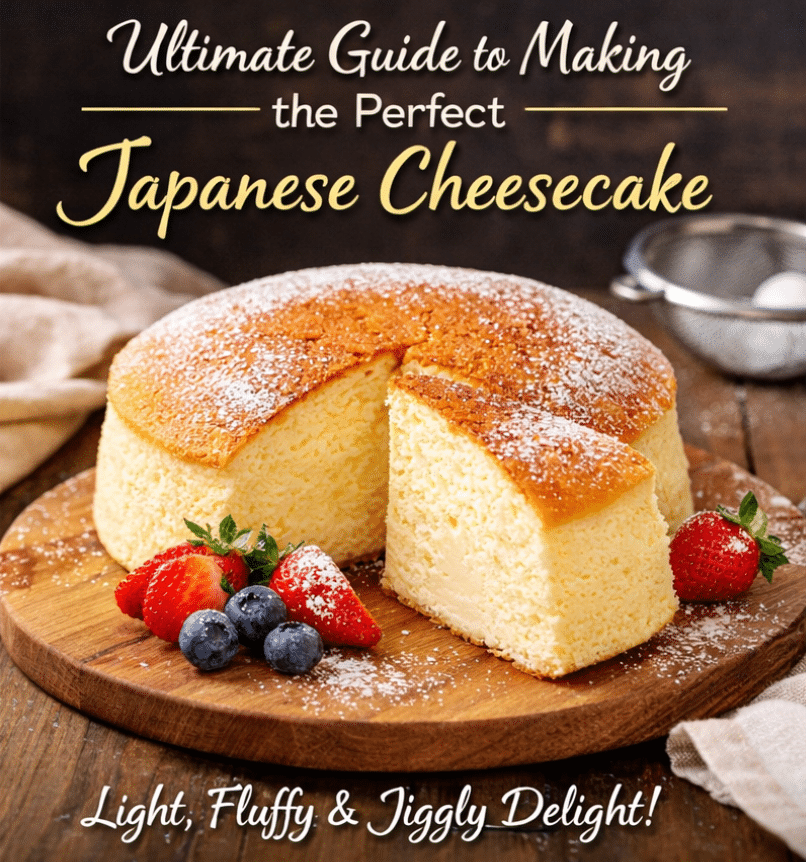
Japanese cheesecake is known for its light, airy texture and delicate flavor. Unlike traditional cheesecakes, this version has a fluffy, almost soufflé-like consistency that melts in your mouth. Also known as the jiggly cheesecake due to its wobbly, soft texture, this treat is a favorite for those who prefer a less dense, more refined dessert.
In this post, we’ll guide you step-by-step through the process of making the perfect Japanese cheesecake. Plus, we’ve included FAQs and some tips to ensure your cheesecake turns out just like the ones you’ve seen in Instagram food posts.
Table of Contents
- What is Japanese Cheesecake?
- Why is it Called “Jiggly Cheesecake”?
- Ingredients for Japanese Cheesecake
- Step-by-Step Recipe for Jiggly Japanese Cheesecake
- Tips for the Perfect Jiggly Cheesecake
- Serving Suggestions for Japanese Cheesecake
- FAQs about Japanese Cheesecake
- Conclusion
Perfect Your Culinary Art! Oliver Agour’s Innovative E-Books Are HERE!
Are you ready to take your modern cooking to the next level? Whether you’re following viral culinary trends or focusing on healthy cooking and quick recipes, Oliver Agour’s ebook collection is your essential guide to cooking smarter and more efficiently.
1. 20 TikTok-Style Recipes: Cook What’s Viral!
Unlock the secrets behind trending recipes and create eye-catching dishes that look spectacular and are ready in just minutes. This digital cooking guide is perfect for:
Content creators (Food Bloggers)
Food enthusiasts
Busy cooks looking for quick meal ideas
➤ Download now: https://oliveragour.gumroad.com/l/20-TikTok-Style-Recipes
2. From To Yogurt: Your Homemade Yogurt Masterclass
Transform a simple ingredient into a culinary masterpiece! This complete course gives you the exact steps for making homemade yogurt (from scratch) and reveals a wide range of creative yogurt-based recipes you won’t find anywhere else.
➤ Get it here: https://oliveragour.gumroad.com/l/FromToYogurt
What is Japanese Cheesecake?
Japanese cheesecake, often referred to as jiggly cheesecake due to its incredibly soft, wobbly texture, is a variation of traditional cheesecake that originated in Japan. It’s characterized by its light and airy texture, achieved by folding whipped egg whites into a mixture of cream cheese, egg yolks, and other ingredients. Unlike its Western counterparts, Japanese cheesecake isn’t as rich or dense. Instead, it’s spongy and smooth, with a subtle tanginess from the cream cheese.
While it shares the same fundamental ingredients as a traditional cheesecake, the difference lies in the method of preparation. The addition of beaten egg whites gives the cheesecake its unique soufflé-like consistency, making it light and fluffy.
Why is it Called “Jiggly Cheesecake”?
The term “jiggly cheesecake” is derived from the playful and mesmerizing wobble that occurs when you gently shake the cheesecake after it has been baked. This unique texture comes from the high ratio of egg whites to cream cheese, which creates a soft, mousse-like consistency. The cake jiggles when you move it, and this is a feature many fans love, as it signals that the cheesecake has achieved the perfect level of fluffiness.
This jiggly nature is what sets Japanese cheesecake apart from its more traditional, dense counterparts, which have a firm texture that doesn’t move or wobble when shaken.
Ingredients for Japanese Cheesecake
To make your own jiggly Japanese cheesecake, you will need the following ingredients:
Main Ingredients:
- 200g (7 oz) Cream Cheese (softened)
- 50g (1/4 cup) Unsalted Butter
- 100g (1/2 cup) Whole Milk
- 6 Large Eggs (separate yolks and whites)
- 120g (1/2 cup) Granulated Sugar
- 1 tsp Vanilla Extract
- 50g (1/4 cup) Cake Flour (or all-purpose flour)
- 20g (2 tbsp) Cornstarch
- Pinch of Salt
For the Water Bath:
- 1 liter (4 cups) of Hot Water (for the water bath)
Step-by-Step Recipe for Jiggly Japanese Cheesecake
Step 1: Preheat the Oven and Prepare the Pan
Preheat your oven to 160°C (320°F). You’ll need an 8-inch round cake pan. Line the bottom of the pan with parchment paper, but don’t grease the sides. The cheesecake will rise and you want it to cling to the sides for the perfect texture.
Step 2: Melt the Cream Cheese, Butter, and Milk
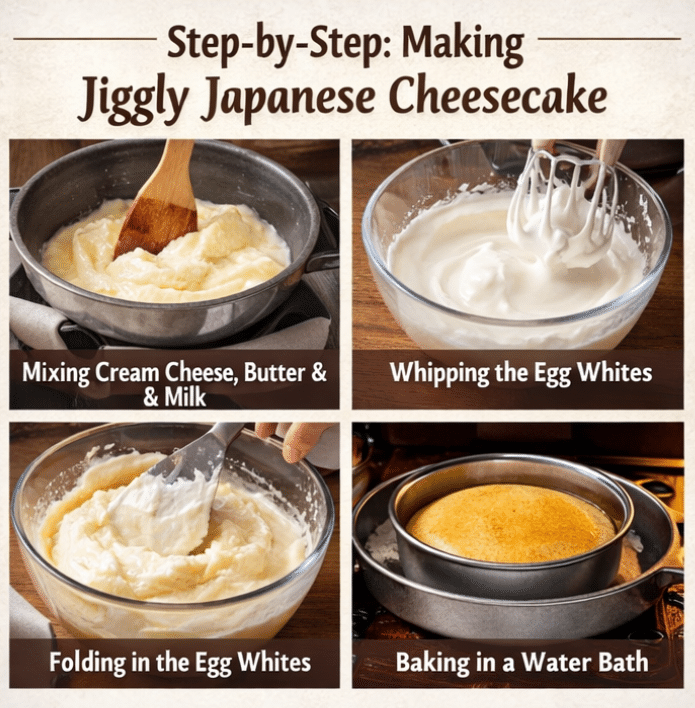
In a heatproof bowl, combine the cream cheese, unsalted butter, and milk. Place the bowl over a double boiler (or heatproof dish over a pot of simmering water). Stir gently until the mixture becomes smooth and creamy. Once melted, remove the bowl from the heat and allow it to cool slightly.
Step 3: Whisk the Egg Yolks and Dry Ingredients
In a separate bowl, whisk together the egg yolks, cake flour, cornstarch, and a pinch of salt until smooth. Gradually add the cooled cream cheese mixture and mix until well incorporated. Stir in the vanilla extract.
Step 4: Beat the Egg Whites
In a clean bowl, use an electric mixer to beat the egg whites until soft peaks form. Slowly add granulated sugar in small amounts, continuing to beat until stiff peaks form.
Step 5: Fold the Egg Whites into the Batter
Carefully fold the beaten egg whites into the cream cheese mixture. Use a spatula to gently combine the two, making sure not to deflate the airy texture of the egg whites.
Step 6: Bake in a Water Bath
Pour the batter into your prepared cake pan and smooth the top. Set the cake pan into a larger baking dish or roasting pan and fill the outer pan with hot water until it reaches halfway up the sides of the cake pan. This will create a water bath that helps bake the cheesecake evenly and prevents cracking.
Bake the cheesecake for 50-60 minutes, or until it’s golden brown on top and a toothpick inserted into the center comes out clean. Turn off the oven and leave the door ajar for 10 minutes to let the cheesecake cool down slowly.
Step 7: Cool and Serve
Once the cheesecake has cooled to room temperature, refrigerate it for at least 4 hours, or preferably overnight. When ready to serve, remove it from the pan and gently peel off the parchment paper. Slice and enjoy your delicate, jiggly cheesecake.
Tips for the Perfect Jiggly Cheesecake
- Room Temperature Ingredients: Make sure the cream cheese and eggs are at room temperature. This helps the ingredients combine smoothly and prevents any lumps in the batter.
- Don’t Overmix the Egg Whites: When folding in the egg whites, be gentle. Overmixing will cause the air to escape, which could result in a denser cake.
- Use a Water Bath: The water bath is essential for preventing the cheesecake from cracking. It ensures the cheesecake bakes evenly and stays moist.
- Cool Slowly: Let the cheesecake cool in the oven with the door slightly ajar before removing it. This prevents the sudden temperature change that can cause cracks.
Serving Suggestions for Japanese Cheesecake
- Fresh Fruits: Serve with fresh berries like strawberries, blueberries, or raspberries for a refreshing contrast to the rich and airy texture.
- Whipped Cream: Add a dollop of lightly sweetened whipped cream on top for extra indulgence.
- Matcha Powder: For a unique twist, dust the top of the cheesecake with matcha powder for a subtle bitterness that balances the sweetness of the dessert.
FAQs about Japanese Cheesecake
Why is my Japanese cheesecake not jiggly?
If your cheesecake isn’t jiggly, it could be due to overbaking or overmixing the egg whites. Make sure to beat the egg whites to stiff peaks and fold them in gently. Also, ensure you use the water bath to maintain moisture while baking.
Can I use a different pan for this recipe?
Yes, you can use a different size pan, but the baking time may vary. Just ensure the batter is no more than halfway up the sides of the pan, and adjust the baking time accordingly.
Can I make Japanese cheesecake ahead of time?
Yes, Japanese cheesecake can be made a day in advance. In fact, letting it chill in the refrigerator overnight helps the flavors set and gives it a firmer texture.
Is Japanese cheesecake gluten-free?
This recipe contains flour, so it’s not gluten-free. However, you can substitute the flour with a gluten-free flour blend to make it suitable for those with dietary restrictions.
Why does Japanese cheesecake crack?
Cracking can happen if the cheesecake is baked too quickly or cooled too quickly. Ensure the oven temperature is steady and use the water bath to create a moist baking environment. Allow the cheesecake to cool gradually in the oven before removing it.
Conclusion
Japanese cheesecake, or jiggly cheesecake, is a unique and delicious treat that’s lighter and fluffier than traditional cheesecake. Its delicate, mousse-like texture and subtle sweetness make it a favorite among dessert lovers. By following the simple steps in this guide, you can make your very own perfect jiggly cheesecake at home.
With a little patience and some careful attention to detail, your cheesecake will turn out beautifully, ready to impress family and friends at your next gathering.






Leave a Reply