
Table of Contents
- Introduction
- What Does Healthy Eating Really Mean?
- Why Healthy Eating Matters for the Body and Mind
- The Power of Whole Foods
- Eating a Rainbow: Why Color Matters
- Balancing Macronutrients
- Understanding Portion Control
- The Importance of Protein
- Healthy Fats vs Unhealthy Fats
- Choosing the Right Carbohydrates
- The Role of Fiber in Digestion
- Hydration and Its Impact on Health
- Reducing Sugar the Smart Way
- Limiting Ultra-Processed Foods
- Meal Timing and Regular Eating
- Mindful Eating Habits
- Building a Healthy Plate
- Cooking at Home More Often
- Smart Snacking Tips
- Reading Food Labels
- Gut Health and Probiotics
- Supporting Immunity Through Nutrition
- Healthy Eating on a Budget
- Healthy Eating for Busy Lifestyles
- Common Nutrition Myths
- Emotional Eating and How to Manage It
- Creating Sustainable Habits
- Healthy Eating for Long-Term Wellness
- Simple Daily Healthy Eating Routine
- Conclusion
Perfect Your Culinary Art! Oliver Agour’s Innovative E-Books Are HERE!
Are you ready to take your modern cooking to the next level? Whether you’re following viral culinary trends or focusing on healthy cooking and quick recipes, Oliver Agour’s ebook collection is your essential guide to cooking smarter and more efficiently.
1. 20 TikTok-Style Recipes: Cook What’s Viral!
Unlock the secrets behind trending recipes and create eye-catching dishes that look spectacular and are ready in just minutes. This digital cooking guide is perfect for:
Content creators (Food Bloggers)
Food enthusiasts
Busy cooks looking for quick meal ideas
➤ Download now: https://oliveragour.gumroad.com/l/20-TikTok-Style-Recipes
2. From To Yogurt: Your Homemade Yogurt Masterclass
Transform a simple ingredient into a culinary masterpiece! This complete course gives you the exact steps for making homemade yogurt (from scratch) and reveals a wide range of creative yogurt-based recipes you won’t find anywhere else.
➤ Get it here: https://oliveragour.gumroad.com/l/FromToYogurt
1. Introduction
Healthy eating is not about strict rules, extreme diets, or giving up all your favorite foods. It is about learning how to nourish your body with the right balance of nutrients so you can feel energetic, strong, focused, and emotionally well. In today’s fast-paced world, where processed foods and sugary snacks are everywhere, developing healthy eating habits is one of the most powerful ways to protect your long-term health.
This guide to healthy eating tips will help you understand how food affects your body, how to build balanced meals, and how to create habits that last a lifetime. Whether your goal is better digestion, weight management, stronger immunity, clearer skin, or more energy, healthy eating is the foundation.
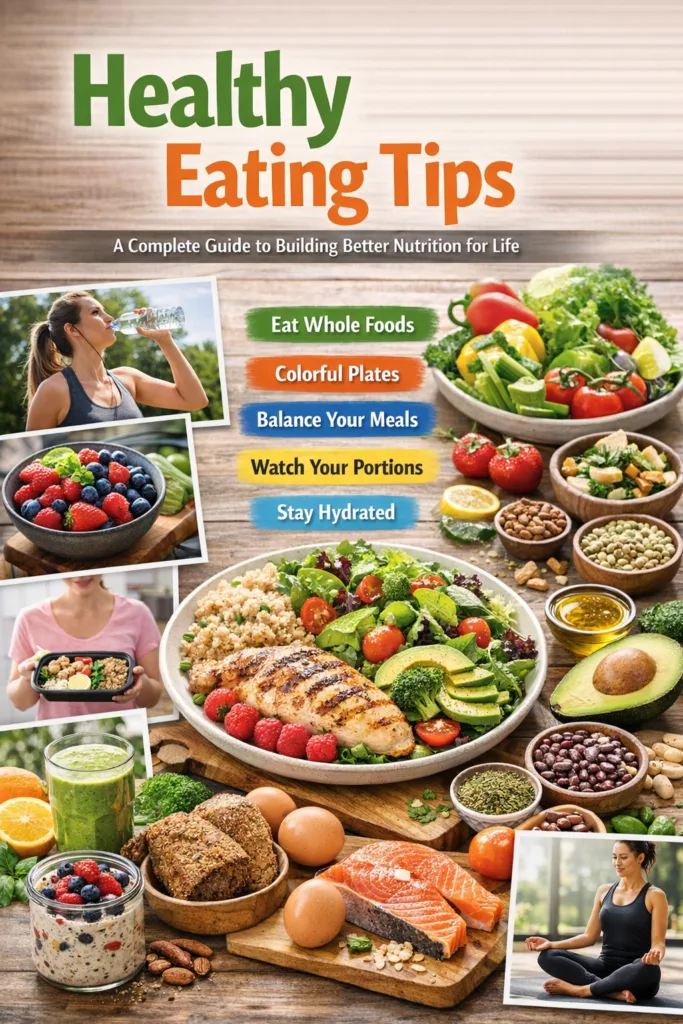
2. What Does Healthy Eating Really Mean?
Healthy eating means providing your body with the nutrients it needs to function properly. It involves:
- Eating a variety of foods
- Choosing whole and minimally processed ingredients
- Balancing carbohydrates, proteins, and fats
- Controlling portion sizes
- Staying hydrated
- Eating consistently
Healthy eating is not about perfection. It is about progress and making better choices most of the time.
3. Why Healthy Eating Matters for the Body and Mind
Food is fuel. The quality of your fuel affects:
- Energy levels
- Brain function
- Mood stability
- Immune strength
- Digestive health
- Hormonal balance
- Skin, hair, and nails
When you eat nutrient-dense foods, your body works more efficiently, recovers faster, and resists illness better.
4. The Power of Whole Foods
Whole foods are foods that are close to their natural state. They include:
- Fresh fruits and vegetables
- Whole grains
- Lean meats and fish
- Eggs
- Legumes
- Nuts and seeds
- Dairy in moderation
These foods provide vitamins, minerals, fiber, antioxidants, and healthy fats that processed foods lack.
5. Eating a Rainbow: Why Color Matters
Different colors in food represent different protective compounds:
- Red: Heart health
- Orange and yellow: Eye health and immunity
- Green: Detox support and bone strength
- Blue and purple: Brain protection
- White: Immune defense
A colorful plate usually means a nutrient-rich plate.
6. Balancing Macronutrients
Every healthy meal should include:
- Protein for repair and satiety
- Carbohydrates for energy
- Healthy fats for hormones and brain health
- Fiber for digestion
Balance prevents blood sugar spikes and keeps hunger stable.
7. Understanding Portion Control
Eating healthy is also about quantity. Even nutritious foods can lead to weight gain if portions are too large. Learning visual portion guides helps:
- Protein: Palm size
- Carbohydrates: Fist size
- Fats: Thumb size
- Vegetables: Half the plate
8. The Importance of Protein
Protein supports:
- Muscle growth
- Immune function
- Hormone production
- Feeling full longer
Good sources include eggs, fish, chicken, yogurt, beans, lentils, tofu, and nuts.
9. Healthy Fats vs Unhealthy Fats
Healthy fats come from:
- Olive oil
- Avocados
- Nuts
- Seeds
- Fatty fish
Unhealthy fats include trans fats and highly refined vegetable oils, which increase inflammation.
10. Choosing the Right Carbohydrates
Choose complex carbohydrates like:
- Oats
- Brown rice
- Whole-grain bread
- Sweet potatoes
- Legumes
They digest slowly and provide steady energy.
11. The Role of Fiber in Digestion
Fiber supports:
- Gut health
- Blood sugar control
- Cholesterol balance
- Fullness
Vegetables, fruits, whole grains, and seeds are excellent fiber sources.
12. Hydration and Its Impact on Health
Water is essential for:
- Digestion
- Circulation
- Detoxification
- Brain performance
- Skin health
Drink water regularly throughout the day.
13. Reducing Sugar the Smart Way
Excess sugar contributes to:
- Weight gain
- Fatigue
- Inflammation
- Tooth decay
Choose fruit for natural sweetness and limit sugary drinks and desserts.
14. Limiting Ultra-Processed Foods
Ultra-processed foods are often high in:
- Refined sugar
- Unhealthy fats
- Artificial additives
- Excess sodium
Reducing them improves overall nutrition quality.
15. Meal Timing and Regular Eating
Eating at regular intervals helps:
- Maintain energy
- Prevent overeating
- Stabilize blood sugar
Skipping meals often leads to cravings.
16. Mindful Eating Habits
Mindful eating means:
- Eating slowly
- Listening to hunger signals
- Avoiding distractions
- Enjoying each bite
This improves digestion and satisfaction.
17. Building a Healthy Plate
A simple way to practice healthy eating every day is to build a balanced plate at each meal. A healthy plate should look like this:
- Half of the plate filled with vegetables and fruits
- One quarter with lean protein
- One quarter with whole grains or complex carbohydrates
- A small portion of healthy fats
This visual method makes healthy eating easier without counting calories or measuring everything.
18. Cooking at Home More Often
Cooking at home allows you to control ingredients, cooking methods, and portion sizes. Home-cooked meals usually contain less sugar, less unhealthy fat, and fewer preservatives than restaurant or fast food.
Simple healthy cooking habits include:
- Grilling, baking, steaming, or sautéing instead of frying
- Using herbs and spices instead of excess salt
- Choosing olive oil instead of butter or margarine
19. Smart Snacking Tips
Healthy snacks help maintain energy and prevent overeating at meals. Good snack options combine protein, fiber, and healthy fats, such as:
- Apple with peanut butter
- Yogurt with berries
- Nuts and a piece of fruit
- Hummus with vegetables
Avoid snacks high in refined sugar and white flour, which cause energy crashes.
20. Reading Food Labels
Understanding food labels is an important healthy eating skill. Look for:
- Short ingredient lists
- Low added sugar
- Low trans fat
- Moderate sodium
- High fiber
The first ingredients listed are the most abundant in the product, so choose foods where whole ingredients appear first.
21. Gut Health and Probiotics
A healthy gut supports digestion, immunity, and even mood. Foods that support gut health include:
- Yogurt
- Kefir
- Sauerkraut
- Kimchi
- Fiber-rich vegetables
- Whole grains
Prebiotic foods feed good bacteria, while probiotic foods add beneficial bacteria.
22. Supporting Immunity Through Nutrition
Healthy eating strengthens your immune system. Key nutrients include:
- Vitamin C from citrus and peppers
- Vitamin A from carrots and sweet potatoes
- Zinc from seeds and legumes
- Protein for antibody production
A varied, balanced diet is your best immune defense.
23. Healthy Eating on a Budget
Healthy eating does not have to be expensive. Budget-friendly tips include:
- Buying seasonal produce
- Choosing frozen vegetables and fruits
- Cooking dried beans and lentils
- Planning meals ahead
- Reducing food waste
Nutritious food can be affordable with smart planning.
24. Healthy Eating for Busy Lifestyles
For busy days:
- Prepare meals in advance
- Keep healthy snacks ready
- Use simple recipes with few ingredients
- Choose quick proteins like eggs, tuna, or yogurt
Consistency matters more than perfection.
25. Common Nutrition Myths
Some myths to avoid:
- Carbs are always bad
- Fat makes you fat
- Skipping meals helps weight loss
- Detox diets are necessary
Balanced nutrition is far more effective than extreme rules.
26. Emotional Eating and How to Manage It
Emotional eating is common. Strategies to manage it include:
- Identifying triggers
- Practicing stress management
- Eating regular meals
- Finding non-food coping methods like walking, breathing, or journaling
27. Creating Sustainable Habits
Healthy eating is a lifestyle, not a short-term plan. Build habits gradually:
- Start with small changes
- Be consistent
- Allow flexibility
- Focus on long-term progress
28. Healthy Eating for Long-Term Wellness
Long-term healthy eating supports:
- Heart health
- Brain function
- Bone strength
- Hormonal balance
- Healthy aging
Your daily food choices shape your future health.
29. Simple Daily Healthy Eating Routine
A simple routine could include:
- Balanced breakfast
- Water throughout the day
- Protein and vegetables at each meal
- Fruit for dessert
- Light evening meal
Structure supports consistency.
30. Conclusion
Healthy eating is one of the most powerful tools you have to improve your quality of life. By choosing whole foods, balancing nutrients, controlling portions, staying hydrated, and building mindful habits, you create a strong foundation for physical and mental well-being.
You do not need perfection. You need consistency, awareness, and kindness toward yourself. Every healthy choice, no matter how small, moves you closer to a stronger, more energetic, and healthier life.